AI vs. Manual Journalist Outreach: Key Differences
Explore the pros and cons of AI vs. manual journalist outreach, and discover how a hybrid approach can enhance your PR campaigns.

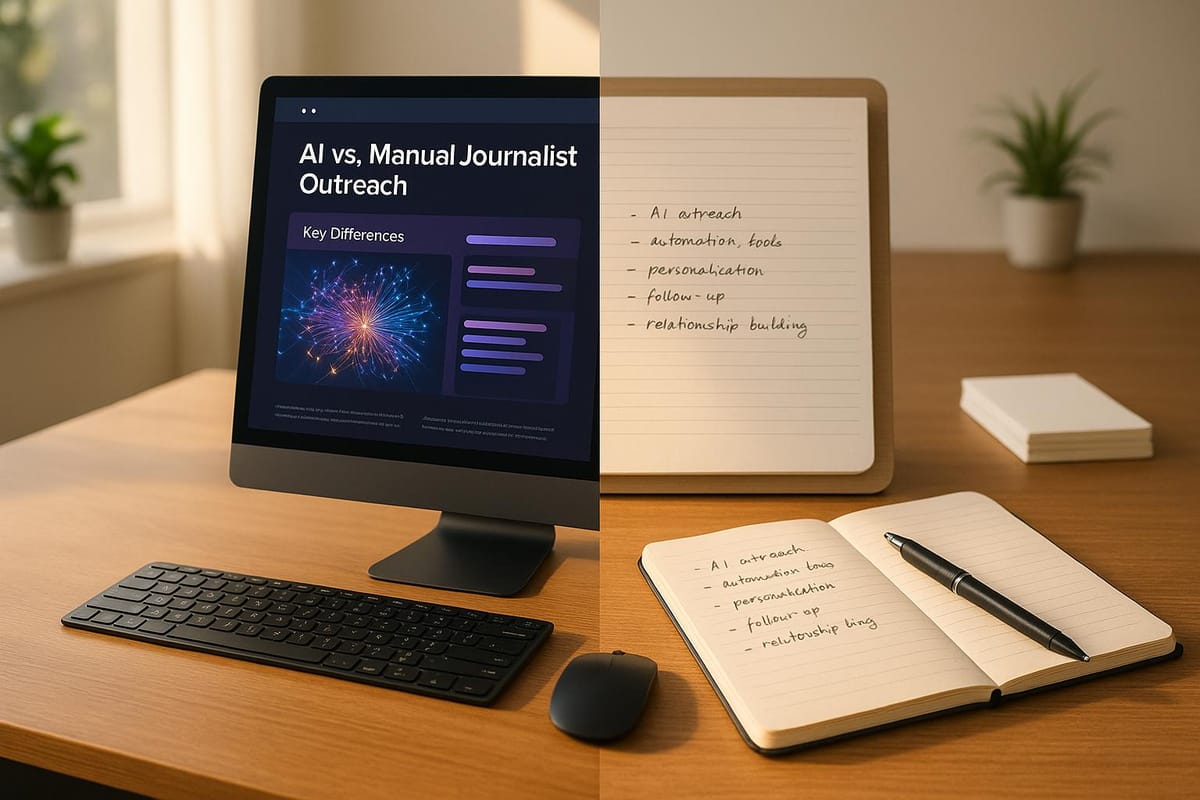
When it comes to connecting with journalists, you have two main options: manual outreach or AI-powered tools. Manual outreach involves personalized research and communication, while AI tools streamline the process by automating tasks like identifying contacts and crafting pitches. Here's a quick breakdown:
- Manual Outreach: Offers a personal touch and builds stronger relationships but is time-intensive and harder to scale.
- AI-Powered Outreach: Saves time, automates repetitive tasks, and handles large-scale campaigns efficiently, though it may lack nuance and context.
Key Takeaways:
- Manual outreach is better for high-profile journalists or sensitive topics.
- AI tools excel in large-scale campaigns and routine updates.
- A hybrid approach - using AI for research and manual efforts for personalization - often works best.
Quick Comparison:
| Feature | Manual Outreach | AI-Powered Outreach |
|---|---|---|
| Research Time | High | Low |
| Personalization | Fully tailored | AI-assisted |
| Scalability | Limited | High |
| Data Accuracy | Prone to errors | Continuously updated |
| Cost | Labor-intensive | Subscription-based |
The best method depends on your goals, timeline, and resources. For a balanced strategy, combine AI's efficiency with manual outreach's relationship-building strengths.
PR Pros, Meet Your New Assistant: Creating a Media List with AI Agents
How AI and Manual Outreach Work Differently
This section dives into the contrasting ways AI and manual journalist outreach operate. The key difference lies in how each method handles tasks like identifying journalists, building connections, and managing media relationships. These differences influence everything from the initial research phase to the final outcomes of a PR campaign.
Manual Outreach: Process and Challenges
Manual outreach is undeniably personal but comes with a heavy workload. The process usually starts with in-depth research, where PR professionals sift through media websites, examine bylines, and manually compile contact lists. Tasks like verifying email addresses, confirming employment details, and ensuring alignment with journalists’ beats can take a lot of time - especially when dealing with large-scale campaigns.
Crafting individual emails and managing follow-ups manually only adds to the workload. This approach also risks outdated or inaccurate data, which can derail efforts. As campaigns grow in scale, the manual method faces significant scalability challenges, making it harder to keep up with increasing demands.
AI-Powered Outreach: Process and Advantages
AI-powered outreach takes a different route, tackling inefficiencies by automating key steps like journalist discovery and matching. Tools like Media AI use advanced algorithms to analyze profiles and quickly pinpoint relevant contacts, dramatically cutting down the time spent on initial research.
With features like smart filtering, PR teams can easily navigate databases of over 30,000 journalists and creators, narrowing down options based on factors like beat coverage, publication reach, location, and engagement metrics. Unlike manual methods, these AI systems continuously update contact information, solving the problem of data decay.
Another standout feature is AI-driven pitch personalization. By analyzing a journalist’s recent work, writing style, and preferences, these tools suggest tailored angles and talking points. This allows teams to create effective pitches with minimal effort. Automated follow-up tools eliminate the hassle of manual scheduling, while real-time analytics provide insights into engagement metrics like open and response rates. This data-driven approach helps PR teams fine-tune their strategies for better results.
Side-by-Side Comparison: AI vs. Manual Workflows
| Workflow Stage | Manual Outreach | AI-Powered Outreach |
|---|---|---|
| Initial Research | Time-intensive manual effort | Automated research for faster discovery |
| Media List Building | Manual compilation and verification | Automated list creation with ongoing updates |
| Pitch Personalization | Fully manual and time-consuming | AI-assisted drafts based on journalist insights |
| Follow-up Management | Manual tracking and basic tools | Automated scheduling with dynamic follow-ups |
| Response Analysis | Limited tracking with manual updates | Real-time analytics for actionable insights |
| Data Accuracy | Prone to errors and outdated information | Continuously updated for reliability |
Manual outreach often becomes unmanageable as the number of pitches increases, while AI-powered systems handle large volumes effortlessly without losing the personal touch. The time and labor costs of manual methods stand in stark contrast to the efficiency and scalability provided by AI tools. This comparison highlights the growing appeal of AI platforms for PR teams juggling multiple campaigns, setting the stage for further discussion on time savings and improved targeting accuracy.
Time and Efficiency: AI vs. Manual Methods
Manual outreach can be a serious time sink. Tasks like finding the right journalists, verifying contact details, personalizing pitches, and scheduling follow-ups often happen one at a time, requiring multiple tools and constant switching. This fragmented process can drag out timelines, especially when managing large-scale or overlapping campaigns. It’s this inefficiency that makes AI a game-changer, saving hours of work and streamlining efforts.
How AI Saves Time
AI platforms, like Media AI, simplify and automate many of these tedious tasks. Advanced filtering systems can quickly sift through massive databases of journalists and creators, cutting out the need for time-consuming list building. Real-time updates ensure contacts are accurate, eliminating manual verification. AI tools also analyze relevant content and journalist preferences to suggest personalized pitches, speeding up the drafting process. On top of that, automated follow-up scheduling takes care of reminders and tracking, freeing up PR professionals to focus on strategy and crafting compelling messages.
The Bottlenecks of Manual Outreach
Manual outreach often stumbles at several points. Finding and verifying contacts can feel like an endless loop of repetitive tasks. Using separate tools for research, email writing, and tracking disrupts workflow and creates inefficiencies. When teams juggle multiple campaigns, the workload grows exponentially, making it harder to meet deadlines. These delays highlight the inefficiencies of manual methods, especially when compared to AI-driven approaches.
Example: Time-to-Pitch Comparison
Take the example of a tech startup launching a new product. With AI, repetitive tasks are automated, allowing the PR team to streamline the campaign and get their pitches out faster. In contrast, manual methods stretch the timeline, potentially causing missed opportunities in a fast-moving market. AI’s ability to adapt quickly to changing media landscapes can make all the difference when timing is everything.
Accuracy and Targeting: AI vs. Manual Approaches
Reaching the right journalist is a critical step in any PR effort. While traditional manual outreach often depends on outdated contact lists and guesswork, AI-powered platforms take a smarter approach. These tools use continuously updated media databases to connect campaigns with journalists who are actively covering related topics. Let’s take a closer look at how AI and manual methods stack up when it comes to accuracy and targeting.
How AI Pinpoints the Right Journalists
AI platforms rely on real-time media databases to identify journalists whose recent work aligns with your campaign. For example, Media AI uses advanced filters to match campaigns with journalists based on their latest articles, preferred topics, and expressed interests. By keeping contact information up to date, these platforms minimize bounce rates and ensure your outreach efforts hit the right targets. This level of precision goes beyond the basic beat assignments often used in manual methods, offering a more focused and effective way to connect with the right reporters.
Scaling Personalization Without Sacrificing Quality
Precise targeting is just one piece of the puzzle - personalization is equally important for making your outreach stand out. Manual outreach often forces PR teams to choose between crafting highly personalized pitches or reaching a broader audience, as tailoring each message takes significant time. AI-powered platforms eliminate that trade-off. By analyzing journalists' recent articles and preferences, these tools suggest customized elements for your pitches, such as subject lines and opening paragraphs, that are more likely to resonate.
With AI, you can send personalized messages at scale, maintaining both relevance and quality across multiple campaigns. This combination of targeted accuracy and efficient personalization makes AI-driven platforms a game-changer for PR teams, allowing them to handle large-scale outreach without compromising on impact or precision.
Media AI: AI-Powered Outreach for U.S. PR Teams
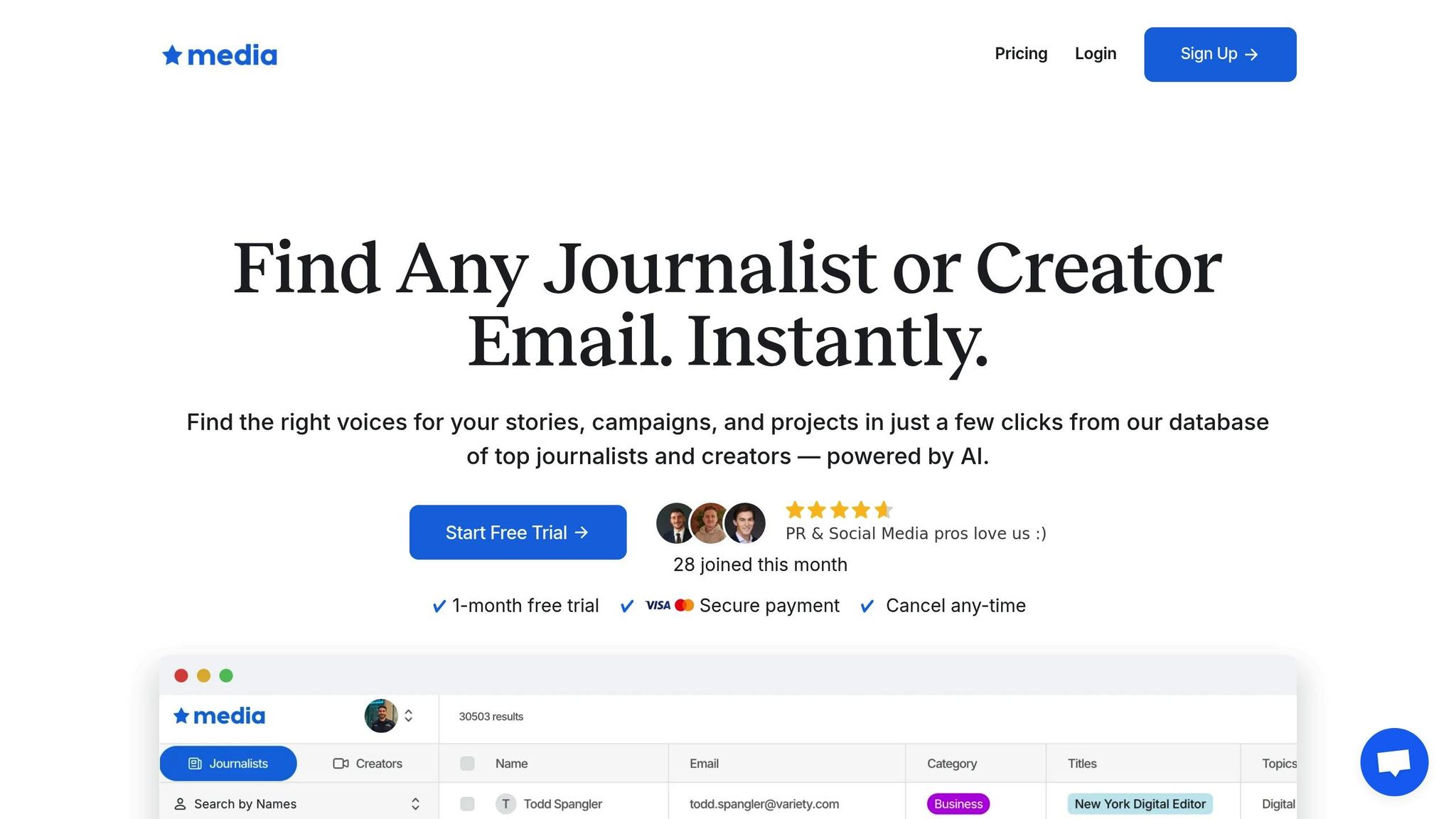
Media AI introduces a fresh way for PR professionals to tackle one of their biggest challenges: effective journalist outreach. This AI-driven platform reshapes how PR teams in the United States find, connect with, and pitch to journalists and content creators. Here’s a closer look at what makes Media AI stand out.
What Media AI Brings to the Table
Media AI gives PR teams access to a massive database of over 30,000 journalists and creators. With advanced filtering tools, users can zero in on contacts based on specific criteria like beat, publication, location, or even recent article topics. This means PR professionals can quickly identify journalists who’ve covered topics similar to their campaigns, saving time and boosting relevance.
The platform also takes the hassle out of moving from research to outreach. Its export feature lets users seamlessly transfer filtered contact lists into email or CRM systems, cutting out tedious manual data entry. Plus, real-time updates keep contact details accurate, reducing the chances of bounced emails and improving the success rate of pitches.
Media AI offers three pricing options:
- The Journalist Database plan at $99/month provides full access to journalist contacts.
- The Creators Database plan, also $99/month, focuses on influencer contacts.
- The Full Database plan, priced at $149/month, combines both.
All plans are contract-free, making it easy for teams to adjust based on their needs. This flexibility is especially helpful for agencies with seasonal clients or startups navigating fluctuating budgets.
Who Gains the Most from Media AI?
Media AI’s features cater to a wide range of PR professionals, each benefiting in unique ways.
PR Agencies can juggle multiple client campaigns more efficiently. The platform’s filtering tools allow account managers to quickly sort journalists by industry, cutting down research time and freeing up hours for strategic work and relationship building.
Social Media Agencies branching into traditional PR find Media AI invaluable. Its combined database bridges the gap between influencer marketing and journalist outreach, enabling these agencies to offer complete media strategies without needing multiple tools or subscriptions.
Startups get access to professional-grade PR tools without breaking the bank. Instead of hiring pricey PR firms or building large in-house teams, startup founders can use the same journalist databases as major agencies - at a fraction of the cost.
Freelance PR Professionals can level the playing field with larger firms. The platform’s user-friendly design allows solo practitioners to handle complex campaigns without additional staff or technical help, giving them a competitive edge.
Media AI’s U.S.-focused approach ensures that contact data, time zones, and media preferences align with American practices. It even accounts for U.S. media cycles and publication schedules, making it a perfect fit for PR teams targeting American audiences.
Problems and Choosing the Right Method
Both AI-driven and manual journalist outreach come with their own set of challenges, which can influence the success of your PR campaigns. Let’s break down the limitations of each approach and how to decide which method fits your goals.
Where AI Falls Short
One of the biggest hurdles with AI-powered platforms is data accuracy. Take databases like Media AI, which boast over 30,000 contacts. While impressive, they can’t fully keep up with the rapid pace of the media world, where journalists frequently switch beats, move to new publications, or update their contact details. This lag can lead to outdated or misaligned targeting.
AI also struggles with context. For instance, it might recommend a tech journalist for your healthcare startup simply because they wrote one related article years ago. Without human oversight, these mismatches can result in irrelevant pitches that not only waste time but risk damaging your brand’s reputation.
Another issue is the lack of personalization in AI-generated pitches. These pitches often miss the nuances - like tone, regional preferences, or subtle journalist interests - that make outreach resonate. And while platforms like Media AI offer competitive pricing, costs can add up quickly during large-scale campaigns, especially for startups with tight budgets or during slower periods when resources are limited.
Where Manual Outreach Struggles
Manual outreach, while more personal, faces its own set of challenges. Scalability is a major issue. A single PR professional can only contact so many journalists in a day without sacrificing quality, which can create bottlenecks during time-sensitive campaigns.
Building media lists manually is also time-consuming. News cycles shift quickly, and by the time research is complete, the information may already be outdated, leaving your story out of sync with current trends.
Consistency can also be a problem. When multiple team members handle outreach, the quality of research and pitches can vary, leading to missed opportunities. Additionally, relying on manual tracking methods like spreadsheets can quickly become overwhelming, especially for larger campaigns, increasing the risk of errors or overlooked follow-ups.
When to Use AI vs. Manual Methods
Each approach has its strengths, so your choice should depend on the scale, urgency, and goals of your campaign.
- AI-Powered Outreach: Ideal for large-scale campaigns targeting multiple industries or markets. For example, if you’re announcing a Series B funding round and need to reach tech, business, and trade journalists across the country, AI tools can help you efficiently identify and contact relevant reporters. AI also works well for ongoing efforts like product updates or quarterly announcements that require consistent outreach.
- Manual Outreach: Best for building relationships with high-profile journalists at outlets like The Wall Street Journal, Forbes, or TechCrunch. These connections thrive on personalized attention and tailored pitches. Manual outreach is also better for sensitive topics, such as crisis communications, where every word in the pitch needs to be carefully chosen.
For teams with limited resources, a mix of both methods can be effective. Focus manual efforts on top-priority journalists while using AI tools to handle broader campaigns. Agencies managing multiple clients often rely on AI to maintain efficiency, while manual outreach is reserved for high-value targets or delicate situations.
A hybrid approach often strikes the right balance. Many PR teams use AI to gather and organize contact information, then shift to manual outreach for crafting personalized pitches to their most important targets. This way, you can take advantage of AI’s speed and efficiency while still maintaining the human touch that builds strong, lasting relationships with the media.
Conclusion: Which Outreach Method Works Best?
The best outreach method depends on your PR goals and the resources you have available. Each approach brings its own strengths to the table, making them valuable in different scenarios.
AI tools like Media AI shine when it comes to scale and efficiency. With access to a network of over 30,000 journalists and creators, these platforms can process massive amounts of data in seconds, delivering precise and relevant insights. This speed is a game-changer for time-sensitive campaigns or when juggling multiple clients. Plus, AI's ability to personalize messaging at scale ensures outreach remains impactful even when targeting large audiences.
"AI's biggest strength is its versatility. It can improve efficiency, automate routine work, and uncover insights in almost any industry." – University of Cincinnati
On the other hand, manual outreach is unmatched when it comes to building genuine relationships. It's essential for connecting with high-profile journalists at outlets like The Wall Street Journal or Forbes. These relationships often require the kind of personal touch and nuanced communication that only a human can provide. For high-stakes, highly personalized communication, manual outreach is still the go-to method.
The most successful PR teams blend both approaches. They use AI tools for research, data analysis, and large-scale campaigns, while relying on manual outreach to nurture critical media relationships and handle sensitive stories. This hybrid strategy balances the efficiency of AI with the depth of human connection, ensuring campaigns are both broad-reaching and meaningful.
Ultimately, the choice between AI, manual outreach, or a combination of the two depends on your campaign's scope, budget, and the importance of media relationships. AI is ideal for large-scale product launches or routine updates, while manual outreach is better suited for high-stakes announcements or crisis management.
By combining AI's speed and analytical power with the creativity and trust-building capabilities of human interaction, PR professionals can gain a competitive edge. As one expert put it, mastering the use of AI is crucial for staying ahead, but the human element remains irreplaceable in fostering trust and driving successful campaigns.
Decide on the right approach by aligning your strategy with your campaign's goals and the relationships you aim to build.
FAQs
How does combining AI with manual journalist outreach improve PR campaigns?
Blending AI with manual outreach can transform your PR campaigns by merging the best of both worlds. AI shines when it comes to quickly processing large amounts of data, pinpointing the most relevant journalists, and scaling personalized outreach. This means you save time on the tedious tasks that often bog down PR professionals.
On the other hand, manual outreach focuses on something AI can't replace: building genuine connections and tailoring messages to truly resonate on a personal level. By combining these efforts, you not only improve how precisely you target your audience but also increase engagement rates. AI takes care of repetitive tasks, giving you more time to focus on strategic, human-centered interactions. Together, this dynamic duo streamlines your outreach process and helps deliver stronger results for your campaigns.
What challenges come with using AI for journalist outreach, and how can they be addressed?
Using AI to streamline journalist outreach comes with its own set of hurdles, including algorithmic biases, limited transparency in decision-making, and ethical concerns tied to automation. These factors can sometimes result in poorly targeted outreach or diminished trust in AI-based methods.
To navigate these challenges, it's crucial to prioritize boosting AI literacy, setting well-defined ethical standards, and routinely evaluating AI tools for potential biases. Transparency about how AI systems function and maintaining robust data security measures are equally important. By pairing AI with human oversight, you can strike a better balance and create a more reliable and efficient journalist outreach process.
When is manual journalist outreach more effective than using AI tools?
Manual journalist outreach shines in situations where a personal touch or a careful approach is essential. For instance, when dealing with intricate or sensitive topics, human insight ensures that the message is customized thoughtfully and adheres to ethical considerations.
It’s also particularly useful when working with journalists who have distinct preferences or less predictable communication habits. Unlike AI tools, which are great for speed and volume, manual outreach offers the flexibility to adapt and the opportunity to create deeper, more genuine connections in these cases.