How To Choose Influencers Using Predictive Analytics
Learn how predictive analytics transforms influencer selection, enabling brands to make data-driven decisions for successful campaigns.

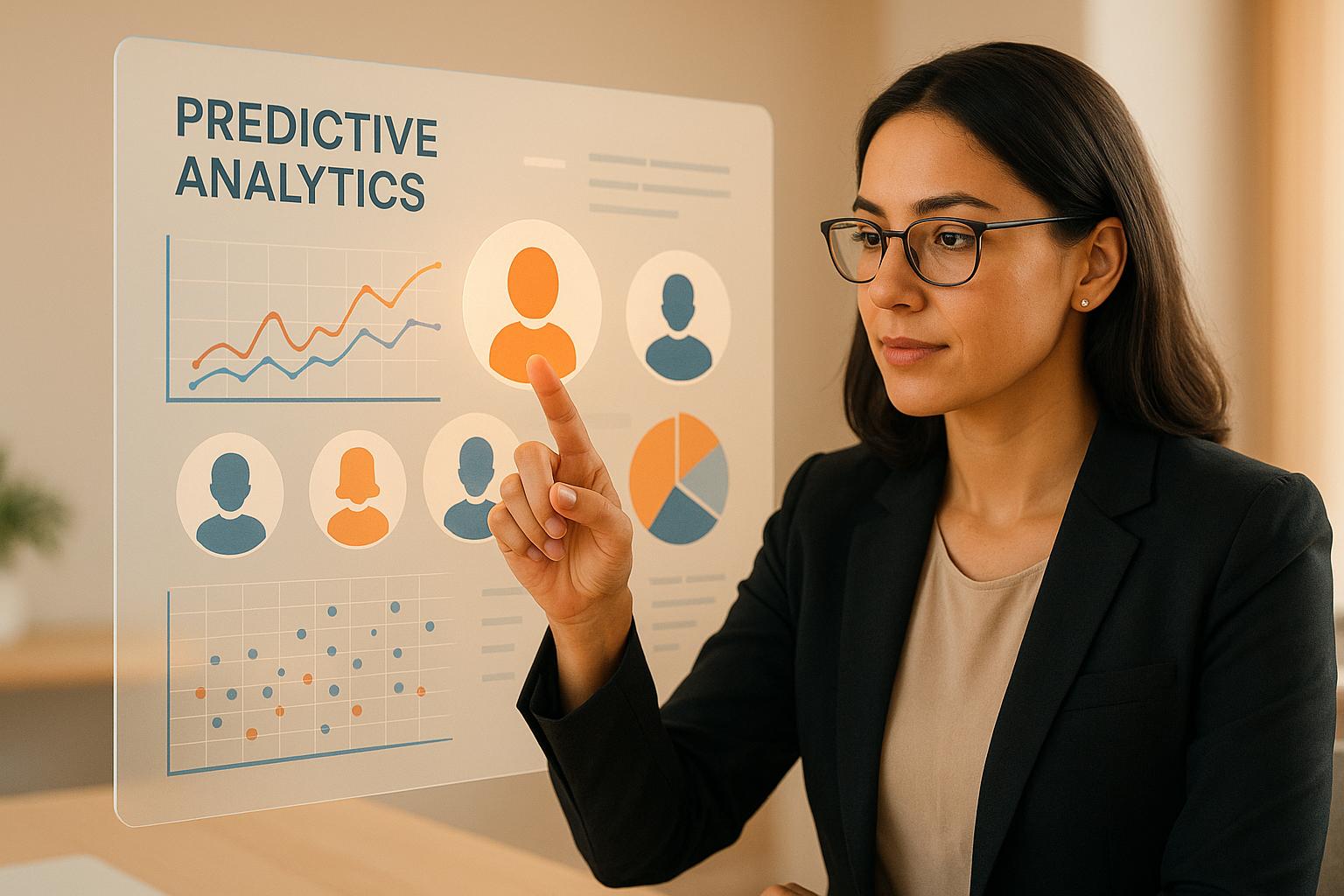
Predictive analytics is changing how brands select influencers by using data to forecast campaign success. Instead of relying on follower counts or intuition, predictive tools analyze metrics like engagement rates, audience demographics, and past performance to identify influencers who are most likely to meet your goals. This approach reduces risks, improves ROI, and aligns campaigns with your target audience.
Here’s how it works:
- Key Metrics: Focus on engagement rates (above 3% is strong), audience demographics, follower growth, content authenticity, and conversion data.
- Data Sources: Use platforms like Instagram Insights, Media AI, and sentiment analysis tools for reliable influencer data.
- Step-by-Step Process:
- Collect and clean data.
- Use predictive models to analyze performance.
- Compare results and rank influencers.
- Validate choices with qualitative reviews or pilot tests.
- Tools Like Media AI: Media AI simplifies influencer selection with features like advanced filters, real-time updates, and campaign simulations, starting at $149/month.
Predictive analytics helps brands make smarter, data-driven decisions, ensuring campaigns connect with the right audiences and deliver measurable results.
How Can Influencer Data Predict Consumer Trends? - Marketing and Advertising Guru
Key Metrics and Data Sources for Choosing Influencers
When it comes to predictive analytics for picking the right influencers, focusing on meaningful metrics and sourcing reliable data is key. Instead of chasing vanity metrics like follower counts, it's smarter to dig deeper into insights that can genuinely forecast campaign performance. By combining these metrics with trusted data sources, you can fine-tune the process of evaluating influencers.
Main Metrics for Evaluating Influencers
-
Engagement Rate
This metric shows how actively an influencer's audience interacts with their content. Calculate it using: (Likes + Comments + Shares) ÷ Follower Count × 100. A rate above 3% indicates strong audience connection, while anything below 1% might hint at issues like low-quality followers. -
Audience Demographics
Understanding an influencer's audience - age, gender, location, and interests - is crucial. For instance, if your campaign targets U.S. millennials, you'll want influencers whose followers are primarily 25–34 years old and based in the U.S.. -
Follower Growth Rate
Measure an influencer's growth momentum with the formula: (New Followers – Old Followers) ÷ Old Followers × 100. A growth rate of about 10% during a campaign suggests increasing reach and expanding influence. -
Content Authenticity
Authenticity matters. Tools powered by AI can help spot fake engagement or purchased followers by identifying unusual growth patterns. Ensuring that an influencer's engagement is genuine builds trust and credibility. -
Brand Alignment
This looks at how well an influencer's tone, style, and values align with your brand. When there's a natural fit between an influencer's content and your brand identity, their audience is more likely to respond positively. -
Conversion Data
Metrics like click-through rates, sign-ups, and sales from previous campaigns reveal an influencer's ability to drive real results. These numbers go beyond surface-level engagement to show actual business impact.
These metrics are essential for building a data-driven model to predict campaign outcomes effectively.
Where to Get Data for Predictive Analytics
Finding the right metrics is just one part of the equation. You also need dependable data sources to back up your analysis.
-
Social Media Analytics Platforms
Platforms like Instagram Insights, TikTok Analytics, and YouTube Analytics provide first-hand data on engagement, audience demographics, and content performance. These tools offer real-time insights that are critical for accurate predictions. -
Influencer Database Platforms
Services like Media AI compile and standardize influencer data. With access to over 30,000 creators and journalists, Media AI lets you filter by engagement, demographics, and brand fit. Its AI tools keep profiles updated, ensuring your data is always current. -
Campaign Management Tools
These tools track historical performance data from past collaborations, analyzing metrics like cost per engagement and return on ad spend. This helps pinpoint influencers with a proven track record of delivering results for your brand. -
Sentiment Analysis Tools
By analyzing audience comments, these tools gauge emotional responses to content. Positive sentiment trends indicate strong brand affinity, while negative feedback can highlight potential risks. -
Third-Party Analytics Services
Platforms like Zigpoll integrate real-time performance data and offer predictive scoring. These services often include features like campaign simulations, giving you a clearer picture of an influencer's potential before launching your campaign.
Using multiple data sources provides a well-rounded view of an influencer's capabilities. Start with social media analytics for foundational insights, leverage platforms like Media AI for discovery, and refine your choices with sentiment analysis and historical data. This layered approach minimizes the risks of incomplete data and improves the accuracy of your predictions for campaign success.
Step-by-Step Guide to Using Predictive Analytics to Select Influencers
Now that we've covered the key metrics and data sources, let's dive into how to apply predictive analytics to choose the right influencers. This approach takes you from raw data to informed decisions that can drive impactful campaign results.
Step 1: Collect and Prepare Data
Start by gathering accurate, relevant data. Platforms like Media AI can provide access to a network of vetted influencers. Use filters to narrow your search based on campaign-specific needs, such as topics, industries, job titles, or geographic focus. For campaigns targeting U.S. audiences, prioritize influencers with American followers and content that aligns with local trends.
Compile essential details like social media handles, follower counts, engagement rates, audience demographics, and contact information. Be thorough - remove duplicates, standardize formats (e.g., dates as MM/DD/YYYY and currency in USD), and flag any unusual follower spikes that could indicate fake engagement. Once your dataset is clean and organized, you're ready to move on to the analysis phase.
Step 2: Analyze and Model Data
With your refined dataset, use statistical tools and machine learning models to uncover patterns and predict influencer performance.
Apply Predictive Models
Regression models can estimate metrics like engagement rates or conversion potential, while classification models help segment audiences to ensure influencer profiles match your target demographic. These tools rely on historical data to generate predictive scores, showing which influencers are most likely to meet your campaign goals.
Use AI-Powered Tools
Many platforms now incorporate AI to automate analysis. These tools can predict future engagement rates and audience growth by identifying trends across large datasets. They can also highlight promising influencers you might not have considered otherwise.
Focus on Key Metrics
Calculate engagement rates, growth trends, and other critical performance indicators using established formulas. Align your analysis with your campaign objectives by focusing on the metrics that matter most.
Simulate Campaign Scenarios
Advanced platforms allow you to run simulations before launching your campaign. By inputting details like budget, timeline, and goals, you can forecast outcomes for different influencer combinations. These insights help you optimize your choices and reduce risk before committing significant resources.
Step 3: Compare and Interpret Results
Turning raw data into actionable insights requires thoughtful interpretation. Use visual tools and direct comparisons to make sense of your analysis.
Build Dashboards for Comparison
Create visual scorecards or dashboards that display key metrics - like engagement rates, predicted conversion rates, and brand alignment - side by side. This makes it easier to identify top-performing influencers and spot potential red flags.
Rank Influencers by Predictive Scores
Sort influencers based on their predictive scores, but don't stop there - look for patterns. For example, you might discover that micro-influencers with smaller followings outperform macro-influencers in your niche. These insights can inform not just your current campaign but also future strategies.
Project Campaign Outcomes
Use your models to predict how different budget allocations might perform. For instance, spreading $5,000 across several nano-influencers could yield a higher return than investing the same amount in one macro-influencer.
Flag Potential Risks
Be on the lookout for warning signs like engagement rates below 1% or irregular follower growth. These factors can negatively impact your campaign, so it's better to identify and address them early.
Step 4: Validate and Finalize Influencer Selection
After analyzing your data, validate your choices with a qualitative review and, if possible, pilot testing. Review the recent content of top-scoring influencers to ensure they align with your brand, maintain professionalism, and create authentic content.
When feasible, test your predictions with small-budget pilot campaigns. Spending a few hundred dollars on your top candidates can reveal how well their actual performance matches your forecasts. Beyond the numbers, consider factors like communication skills, responsiveness, and willingness to collaborate on creative ideas. Combining human judgment with predictive analytics ensures your influencer selections align with both data insights and strategic goals.
Document your decision-making process and compare actual campaign results to your forecasts. This feedback loop will refine your models and improve your future influencer campaigns over time. Predictive analytics isn't a one-and-done solution - it's an evolving tool that gets smarter with every campaign.
How Media AI Supports Predictive Analytics for Influencer Marketing
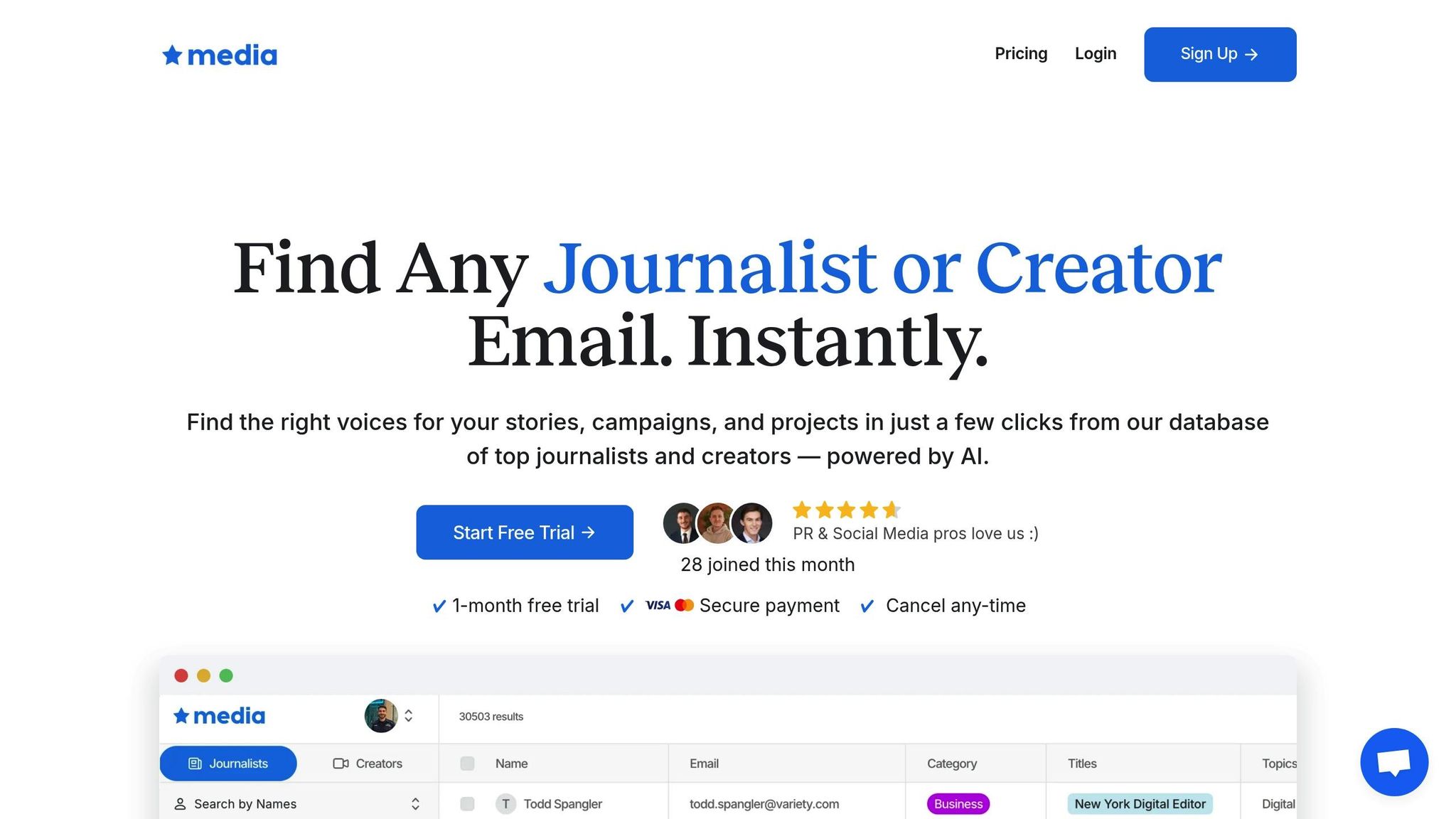
Media AI simplifies influencer selection by combining AI-powered analytics with a database of 30,000 journalists and creators. This platform addresses a common challenge for brands: moving from instinct-based decisions to data-driven influencer partnerships that deliver measurable outcomes.
By analyzing historical performance data, audience demographics, and engagement trends, Media AI predicts how well influencers align with your campaign goals. This approach minimizes costly missteps and helps brands focus their efforts on partnerships with the greatest potential for success.
Key Features of Media AI for Influencer Selection
Media AI enhances influencer selection with a suite of tools designed to maximize campaign effectiveness:
- Advanced Filtering System: The platform lets you filter creators by engagement rate, audience demographics, authenticity, and brand alignment - all essential for predicting campaign outcomes. Influencers are scored based on their potential to achieve specific goals, such as driving engagement, reach, or conversions.
- Real-Time Data Updates: Media AI ensures you're working with up-to-date metrics, which is critical in the ever-changing world of social media. Influencer performance can fluctuate quickly, and relying on outdated data could lead to poor decisions.
- AI Crawler for Contact Verification: The platform's AI crawler continuously scans the web to find and verify contact details for top journalists and creators. This ensures the database stays accurate and current, streamlining your outreach process.
- Export Options for Easy Collaboration: Media AI allows you to export influencer lists, complete with contact details, in formats like Excel or PDF. This makes it simple to organize outreach efforts and share shortlists with your team.
Using Media AI to Streamline Influencer Discovery
Media AI's intuitive interface and AI-driven insights make discovering the right influencers quick and efficient. Instead of manually researching hundreds of potential collaborators, the platform identifies creators whose audience, engagement, and style align with your campaign objectives.
The "Discover" feature offers a curated database of creators and journalists, selected for their expertise and credibility. This saves you time by narrowing your focus to high-quality candidates rather than sifting through thousands of unverified profiles.
Users frequently highlight the platform's effectiveness. Sarah Jones, Marketing Manager at Remote3, shared her experience:
"Media AI made it so easy to find the right collaborators for our campaign. It's a game-changer."
Pricing and Access for Media AI
Media AI provides full database access for $149 per month, which includes unlimited searches, advanced filters, and export options - all without a contract. This pricing is particularly appealing for agencies and brands looking for a scalable, data-focused approach to influencer marketing. By consolidating discovery, analytics, and outreach into one platform, Media AI offers both convenience and value.
For more targeted needs, the platform also offers the Journalist Database and the Creators Database, each priced at $99 per month. These plans include full access to features like predictive analytics and export tools, allowing users to focus on specific content creators. All plans are flexible, with the ability to cancel anytime.
This pricing structure makes Media AI accessible to a wide range of professionals, including PR teams, social media agencies, startups, and freelancers. With its emphasis on actionable insights and campaign forecasting, the platform delivers measurable benefits that go beyond simple contact discovery.
Best Practices for US-Based Campaigns Using Predictive Analytics
When applying predictive analytics to US-based campaigns, the key is tailoring strategies to local insights. Influencer campaigns in the US thrive when analytics are fine-tuned to reflect the nuances of American audiences and market behaviors. By integrating these insights, predictive models become more effective and deliver better results.
Focus on Local Data and Demographics
To ensure success, prioritize influencers with a strong US-based following. For instance, a beauty brand that used predictive analytics to identify influencers with a high percentage of US followers and strong engagement among women aged 18-34 saw a 25% boost in campaign ROI compared to previous efforts without analytics. This illustrates how geographic targeting can drive results.
Your predictive models should focus on critical demographic details, such as audience location (city, state, or region), age groups, gender, ethnicity, language, and interests aligned with American trends. For example, a fitness campaign targeting US audiences should collaborate with influencers who actively discuss American fitness trends and lifestyles.
Understanding regional habits, holidays, and trends is vital for creating campaigns that resonate. Influencers who post about events like Thanksgiving or the Fourth of July naturally connect better with American audiences than those who focus on international themes. These cultural nuances are essential for predictive models to identify influencers who align with US consumer expectations.
Regulatory compliance is another crucial factor. The FTC requires clear disclosure of sponsored content, and predictive analytics can help flag influencers who may pose compliance risks by analyzing their past posts for proper disclosures.
Monitor and Adjust Campaigns in Real-Time
Predictive analytics provides forecasts, not guarantees. The most successful US-based campaigns treat these predictions as a foundation and refine their strategies based on real-time performance data. By monitoring live results, you can quickly identify underperforming influencers and reallocate resources to those delivering better outcomes.
Key performance indicators (KPIs) like engagement rates, conversions, and sentiment should be tracked on live dashboards. For US influencer campaigns, an engagement rate between 1-3% is considered good, with anything above 3% being exceptional. If certain influencers consistently fall short, predictive models can help identify stronger alternatives.
Audience Growth Rate (AGR) is another valuable metric. A 10% AGR during a campaign signals strong performance. When specific influencers drive significant audience growth, consider extending their contracts or reallocating budget to similar profiles.
Agility is critical. If engagement drops or sentiment turns negative, be ready to adjust within 24-48 hours. This could mean swapping influencers, tweaking content, or reallocating budgets. Quick responses often separate mediocre campaigns from outstanding ones.
Use US-Specific Units and Formats
Consistency in using US-specific standards enhances campaign authenticity and builds trust with American audiences. This means using USD for currency, the MM/DD/YYYY date format, comma separators for thousands, and imperial measurements.
These details should be specified in influencer briefs. For example, a fitness campaign should reference "miles" instead of "kilometers", weight in "pounds", and temperature in "Fahrenheit." Such adjustments make content feel more relatable and authentic to US consumers.
Campaign reporting and analytics should also follow these conventions. When presenting metrics like ROI or engagement rates to stakeholders, use familiar US formats to ensure clarity. For instance, a dashboard showing a 15% engagement increase after switching to influencers with higher US-based audiences should display all figures in US dollars and imperial units.
To maintain consistency, provide influencers with clear content guidelines. Templates showing the preferred formatting for prices, measurements, and dates can minimize confusion and ensure alignment with your brand’s standards. When predictive models identify high-potential influencers, equipping them with US-specific guidelines increases their chances of success. By combining these practices with predictive analytics, campaigns can achieve stronger results and deeper connections with American audiences.
Conclusion: Choosing Influencers with Predictive Analytics for Better Campaigns
Predictive analytics has reshaped influencer marketing, turning it into a precise, data-focused strategy. By leveraging historical data, brands can now rely on solid evidence instead of gut feelings to design and execute campaigns. This shift is redefining how influencer partnerships are formed and measured.
Brands adopting predictive analytics consistently see better results compared to those using traditional methods. A great example is SheSpeaks Inc., which used AI to analyze factors like content style, audience demographics, and past campaign performance. The result? Higher engagement rates and improved ROI compared to intuition-driven approaches.
Why Predictive Analytics Makes a Difference in Influencer Marketing
Using predictive analytics eliminates guesswork, boosting ROI and reducing risks by filtering out influencers with fake engagement. It helps marketers zero in on authentic influencers whose audiences align with their target demographics, leading to more impactful campaigns.
This data-driven approach also gives marketers the ability to justify their decisions with clear, evidence-based insights. Campaign goals become more realistic and grounded, thanks to predictive models, which replace overly optimistic assumptions. This transparency builds trust and confidence within marketing teams and among leadership.
Another advantage is scalability. With each campaign, brands can refine their selection models based on actual results, creating a reliable "A-team" of influencers who consistently deliver. This repeatable process ensures influencer selection becomes more accurate and effective over time.
Platforms like Media AI take these benefits even further by simplifying the entire selection process.
How Media AI Streamlines Influencer Selection
Media AI integrates predictive analytics to make influencer selection faster and more efficient. Its extensive database includes over 30,000 verified journalists and creators, offering pre-verified contact details and detailed profiles. This eliminates the need for time-consuming research and provides a reliable starting point for predictive modeling.
The platform’s advanced filtering tools allow marketers to narrow their searches based on topics, categories, job titles, and demographic criteria tailored to US-based campaigns. By working with high-quality, relevant data, predictive models deliver more accurate results. Additionally, Media AI’s export features make it easy to organize and analyze potential candidates systematically.
At just $99 per month for access to the Creators Database or $149 per month for full access to both journalists and creators, Media AI offers a budget-friendly solution with no long-term commitments. This flexibility allows brands to scale their usage as campaign needs evolve.
By combining predictive analytics with Media AI’s streamlined tools, marketers can quickly identify promising influencers, analyze their data, and make informed decisions. This integrated approach not only speeds up the process from research to campaign launch but also ensures higher-quality partnerships.
In today’s competitive influencer marketing landscape, embracing data-driven strategies is essential for achieving measurable success. Predictive analytics provides the foundation, while platforms like Media AI offer the tools to bring these strategies to life. Together, they pave the way for smarter, more efficient influencer selection and campaign execution.
FAQs
How can predictive analytics boost the ROI of influencer marketing campaigns?
Predictive analytics takes the guesswork out of influencer marketing by using data to pinpoint creators who are most likely to deliver results for your campaign. By diving into factors like past performance, audience demographics, and engagement metrics, it helps you choose influencers who genuinely resonate with your target audience and align with your campaign objectives.
This approach ensures your partnerships are strategic, leading to measurable results like stronger engagement, higher conversion rates, and improved ROI. Tools like Media AI simplify the process further by offering features to discover and filter top-performing creators, giving your campaigns a solid foundation of actionable insights.
What makes Media AI an effective tool for identifying the right influencers?
Media AI boasts an impressive database of over 30,000 journalists and creators, making it a go-to resource for finding the ideal partners for your campaigns. With its powerful tools, you can search, filter, and export contact details effortlessly, ensuring you connect with influencers who truly align with your objectives.
From PR to social media and influencer marketing, Media AI streamlines the process of identifying collaborators. This not only saves you valuable time but also ensures your outreach efforts hit the mark with precision and efficiency.
How can brands ensure their data is accurate and reliable when using predictive analytics for influencer marketing?
To ensure precise and trustworthy data for predictive analytics in influencer marketing, brands should concentrate on three essential strategies:
- Choose reliable data sources: Partner with platforms or tools that compile verified, up-to-date details about influencers. This includes key metrics like audience demographics, engagement rates, and previous campaign outcomes.
- Keep data current: Metrics can become outdated fast. Regularly review and refresh your datasets to stay aligned with evolving trends and shifts in influencer performance.
- Utilize AI-powered tools: Tools like Media AI offer advanced filtering and analysis features, making it easier to pinpoint influencers whose audiences align with your campaign objectives. AI-driven insights help minimize errors and enhance targeting precision.
By implementing these steps, brands can make well-informed, data-backed decisions and achieve stronger results in their influencer marketing efforts.